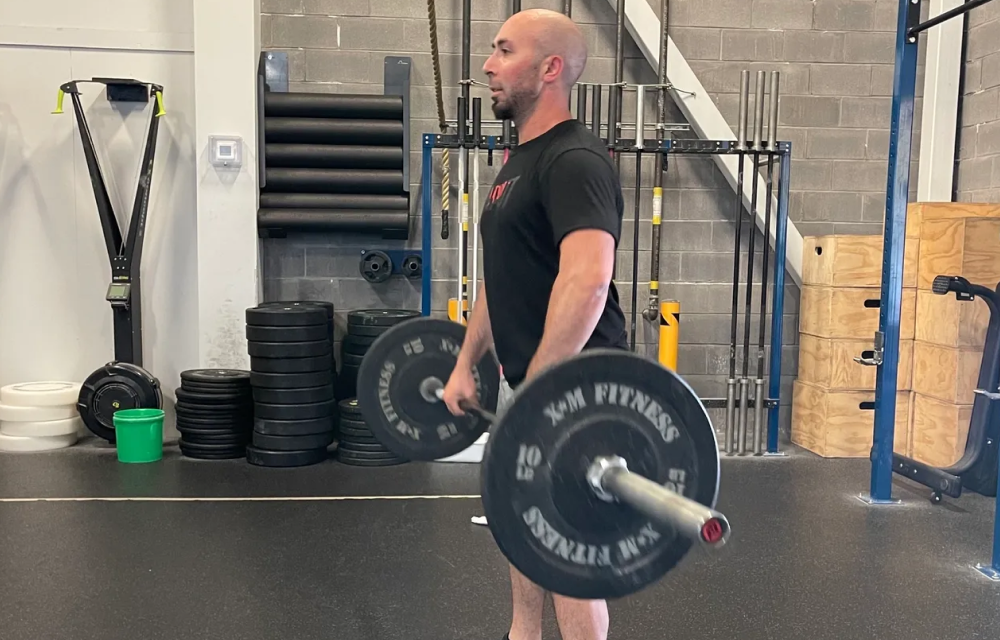
There are different types of contractions that your muscles can go through to help you strength train. Concentric contractions involve shortening of the muscles while contracting (Think about doing a bicep curl and lifting the weight up to your shoulder); Eccentric contractions involve lengthening the muscles while you contract (Think about lowering the weight slowly from your shoulder to your waist level) and the third type is called an isometric contraction.
(Check out our new Stouffville physiotherapy location)
Isometric exercises are a type of strength training that involves contracting your muscles without movement. Unlike other forms of strength training, such as weightlifting or bodyweight exercises, isometric exercises involve holding a static position for a period of time, typically between 5 and 60 seconds. Despite the lack of movement, isometric exercises offer numerous benefits that make them an excellent addition to any fitness routine.
1. Improved Strength and Stability Isometric exercises can help build strength and stability in your muscles, tendons, and ligaments. Holding a muscle in a static position for an extended period of time requires significant effort and energy, and this can help increase the strength of the muscle over time. Isometric exercises are particularly useful for targeting specific muscle groups and helping to build strength in areas that may be weaker or less developed.
2. Reduced Muscle Soreness Isometric exercises can also help reduce muscle soreness and injury risk. Because they do not require movement, isometric exercises are a low-impact form of exercise that is less likely to cause injury or strain. Additionally, because isometric exercises build strength slowly and gradually, they are less likely to cause muscle soreness or fatigue compared to other forms of strength training.
3. Increased Flexibility Despite the lack of movement, isometric exercises can also help improve flexibility. When you hold a muscle in a static position, you are stretching it, which can help improve its range of motion over time. Additionally, isometric exercises can help improve your body’s overall stability and posture, which can make other forms of exercise and physical activity easier and more effective.
4. Better Mental Health Finally, isometric exercises have been shown to positively impact mental health. The focus required to perform isometric exercises can help reduce stress and anxiety, and the endorphins released during exercise can help improve mood and reduce feelings of depression.
Here’s a clip of Catherine Law, one of our Pelvic Health Physiotherapists in Markham and Stouffville, showing 3 different Isometric variations of the wall sit. This exercise can strengthen your legs!
In conclusion, isometric exercises are a versatile and effective form of strength training that offers numerous benefits. Whether you are looking to build strength, improve flexibility, or enhance your mental health, isometric exercises are a great choice. So, why not try incorporating isometric exercises into your fitness routine today and experience the benefits for yourself! If you need direction on how to incorporate Isometric exercises into your training program, book with one of our therapists to get you moving in the right direction!