Running is a great way to stay active for all age groups and fitness levels. Whether you are on the treadmill or enjoying the fresh air outside, running casually or competitively, key muscles are working “behind the scenes” to help you move relatively efficiently and pain free. Learning about the relationships between these muscles can not only improve performance but help with injury prevention as well. Today I will introduce a group of muscles that form the Anterior Oblique Sling and why they are important!
What does the Anterior Oblique Sling do?
The Anterior Oblique Sling acts on your pelvis. The pelvis designed for both stability and to assist in load transfer between the spine and the lower extremities. The shape of the bones and several ligaments of the pelvis work passively to ensure stability. However, during activities such as running or heavy lifting, muscles are required to activate to reinforce the stability of the pelvis.
What muscles form the Anterior Oblique Sling?
The Anterior Oblique Sling is formed by three key muscles and intervening fascia.
1. External Oblique
2. Contralateral Internal Oblique
3. Contralateral Adductors of the Thigh
4. Intervening Abdominal Fascia
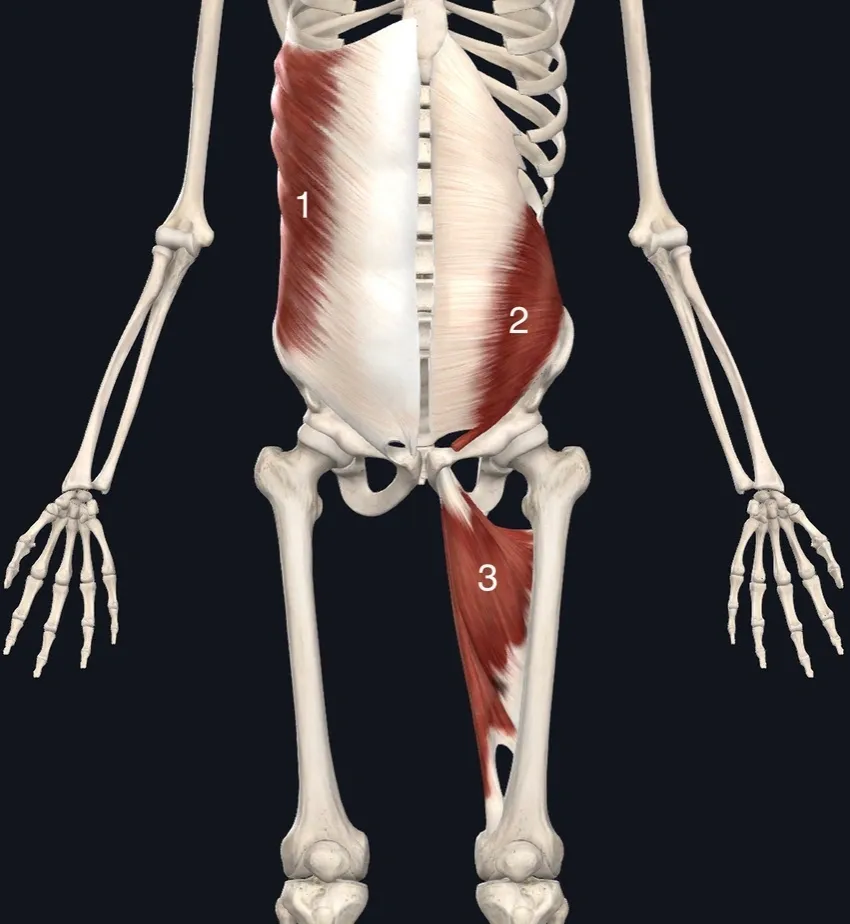
Anterior Oblique Sling Anatomy
What do the muscles of the Anterior Oblique Sling do?
To understand the actions of these muscles, let’s unpack where the muscles attach and what our bodies do when running. The muscles together form a complete diagonal line of force between the trunk, pelvis, and legs. During running, the pelvis must remain stable as previously mentioned and also rotate to drive forces. These muscles act together to stabilize, and contribute to rotational forces which help drive the legs to accelerate.
How can I improve function of my Anterior Oblique Sling?
1. Adductor Side Plank
· Lying on your side, put your top leg on a chair with your knee bent and your bottom knee extended (the elbow of the bottom shoulder should be on the floor). Using the top leg adductors (inside of the thigh), pull yourself up to form a straight line with your body. Hold this position for 15 seconds and repeat 3 times.
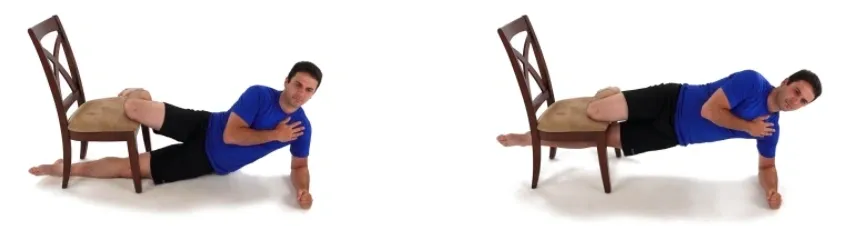
Side Plank to target anterior oblique sling
2. Banded Trunk Rotation
· Stand with a split stance and the elastic tied opposite to the front leg. Keep the core engaged and the pelvis stable. Rotate the body to the opposite side of where the elastic is tied from and return to the original position in a controlled manner. Complete 3 sets of 15 repetitions.
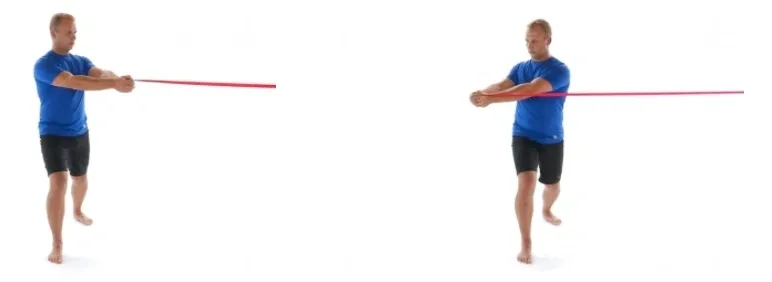
Banded Rotation exercise for the anterior oblique sling.
3. Fascial Release
· Find your trigger points along the muscles of the sling and self-massage!
If you have any questions about the Anterior Oblique Sling, improving your running mechanics, or rehabbing a running related injury, contact any of our great Markham physiotherapists!