It’s been weeks since you had a good night’s sleep. You have a pounding in your head and your muscles feel tense and achy. You feel anxious with a lack of focus. Your stomach feels uneasy and you are indulging in more snacks than typical. These are all examples of how stress (perhaps surrounding a global pandemic such as COVID-19) can manifest itself, causing changes to your body, mood and behaviours. You might be less familiar with how stress and anxiety can influence your pelvic floor.
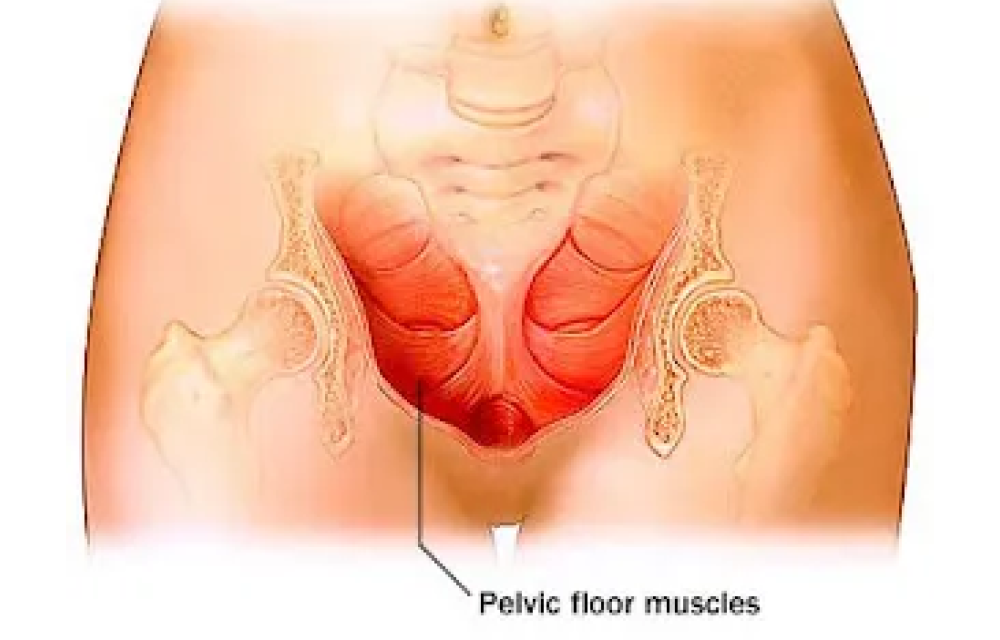
What is the Pelvic Floor?
The pelvic floor is a group of tissues located at the base of the lower back, between the hips and pelvis. It is made up of the muscles, ligaments, nerves and connective tissues that have several important functions on your body, including:
- support for internal organs, including the bladder, bowel, uterus (female), prostate gland (males)
- Sexual function in men and women
- Contribute to core, hip and low back stability/strength
- Ensure regular and comfortable bowel movements and good bladder control. No leaks!
You can locate your pelvic floor muscles by pretending to hold your pee. The gentle squeeze that you feel is your pelvic floor muscles contracting.
Stress and Pelvic Pain
Stress is a normal part of life. It is our bodies’ way of responding to a change in the environment around us, whether that is real or perceived (Office on Women’s Health, 2019). Stress becomes problematic when it is prolonged and there is no relief between stressors. The pelvic floor appears to be particularly vulnerable to our psychological state, meaning that these tissues are likely to experience the negative effects of stress and anxiety. In a study of involuntary pelvic floor activity and experienced threat in women (van der Velde & Everaerd, 2001), women were shown video clips from the movie Jaws, among more neutral clips like that of the weather. The women demonstrated increased pelvic floor tension when exposed to the threatening, or stressful film, but not while watching the neutral footage.
When Stress Wreaks Havoc on the Pelvic Floor
The amount of pelvic floor tension does not seem to be clearly related to our awareness of pelvic floor sensations. In other words, you might not realize you have stress-related pelvic floor tension until it leads to new and troublesome symptoms of dysfunction. What might those symptoms be? Stress and the tightening of pelvic floor muscles can lead to:
- Urinary frequency (increased trips to the washroom)
- Urgency (strong sensation to use the washroom, feels hard to control)
- Constipation
- Nighttime urination (waking up more than once to visit the washroom)
- Sexual pain or dysfunction
- Pelvic girdle pain (feelings of tension radiating into the hips, pubic bone, low back, groin)
Tips for Managing a Stressed-Out Pelvic Floor
When it comes to the pelvic floor, we are particularly good at avoiding stress-related symptoms that appear as warning signs in the body. Symptoms of pelvic floor tension are often embarrassing and sensitive to discuss, so we brush them off in an attempt to get on with our day. We are all quite good at managing short term stressors such as injury (bruises, cuts, trauma). For example, we rest, wrap with ice packs, and/or place a bandage over the area of tissue trauma. Doesn’t our pelvic floor deserve the same TLC? Fortunately, there are things that can be done to manage stress, soothe the nervous system and get rid of unwanted symptoms of pelvic floor dysfunction.
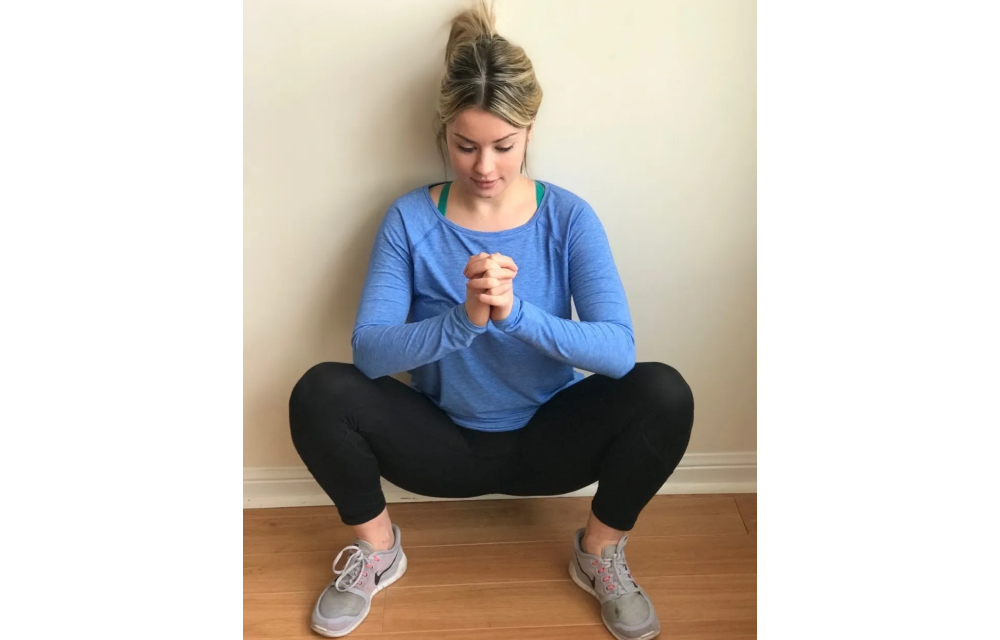
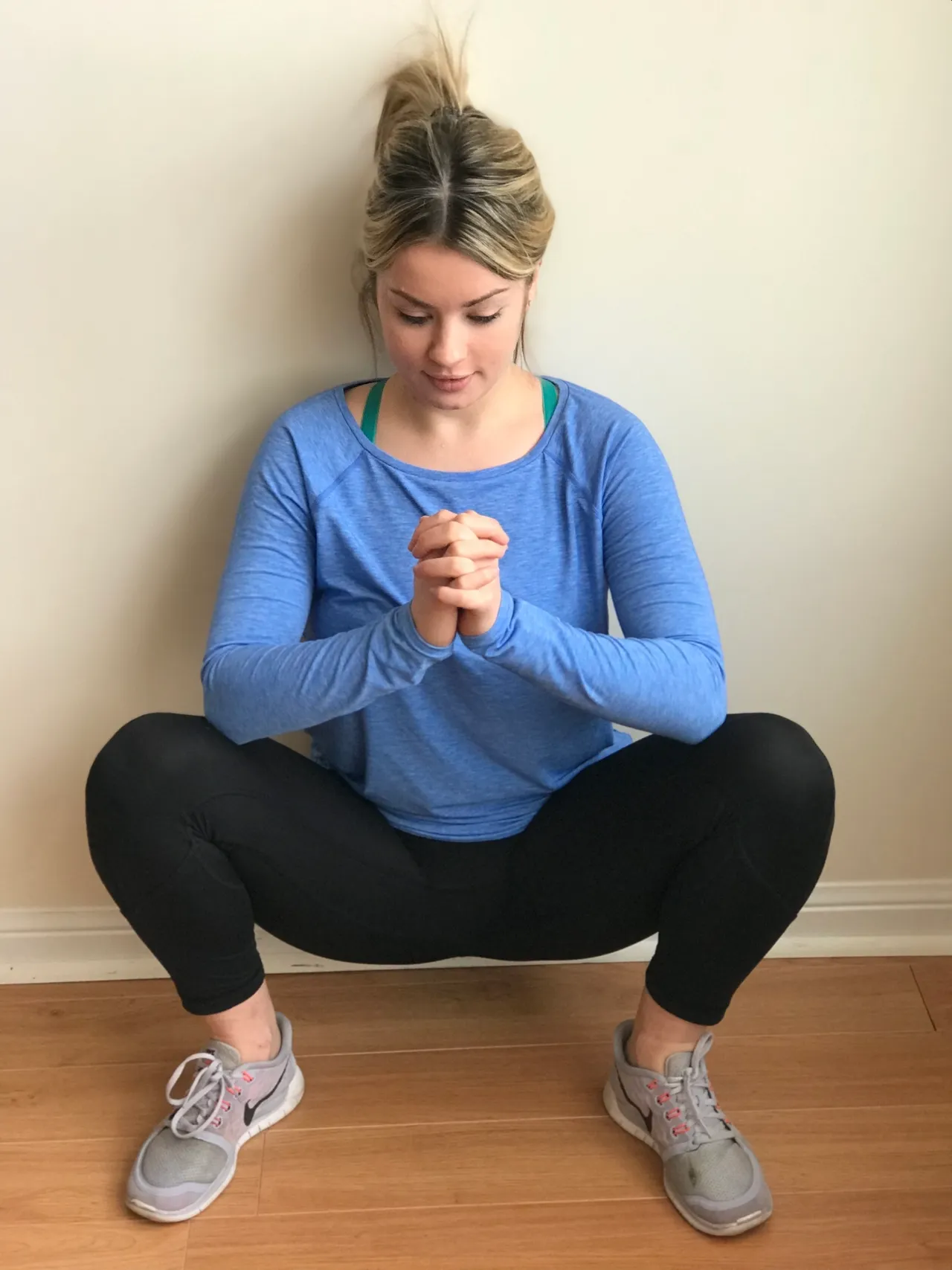 Stretches can help release tension in the Pelvic Floor.
Next time you experience stress, try some deep breathing to the pelvic floor:
- Practice Deep Breathing Exercises.
- Breathe in through your nose allowing your abdomen to expand and pelvic floor muscle to relax (pretend you’re going to the bathroom, but no pushing!)
- Breathe out while making a slow “S” sound and feel your pelvic floor muscles recoil. This practice is great for strengthening your muscles and coordinating your diaphragm to work with your pelvic floor.
- Repeat “breathe in calm, breathe out tension” as you go. Perform daily! (VanDyken, C.)
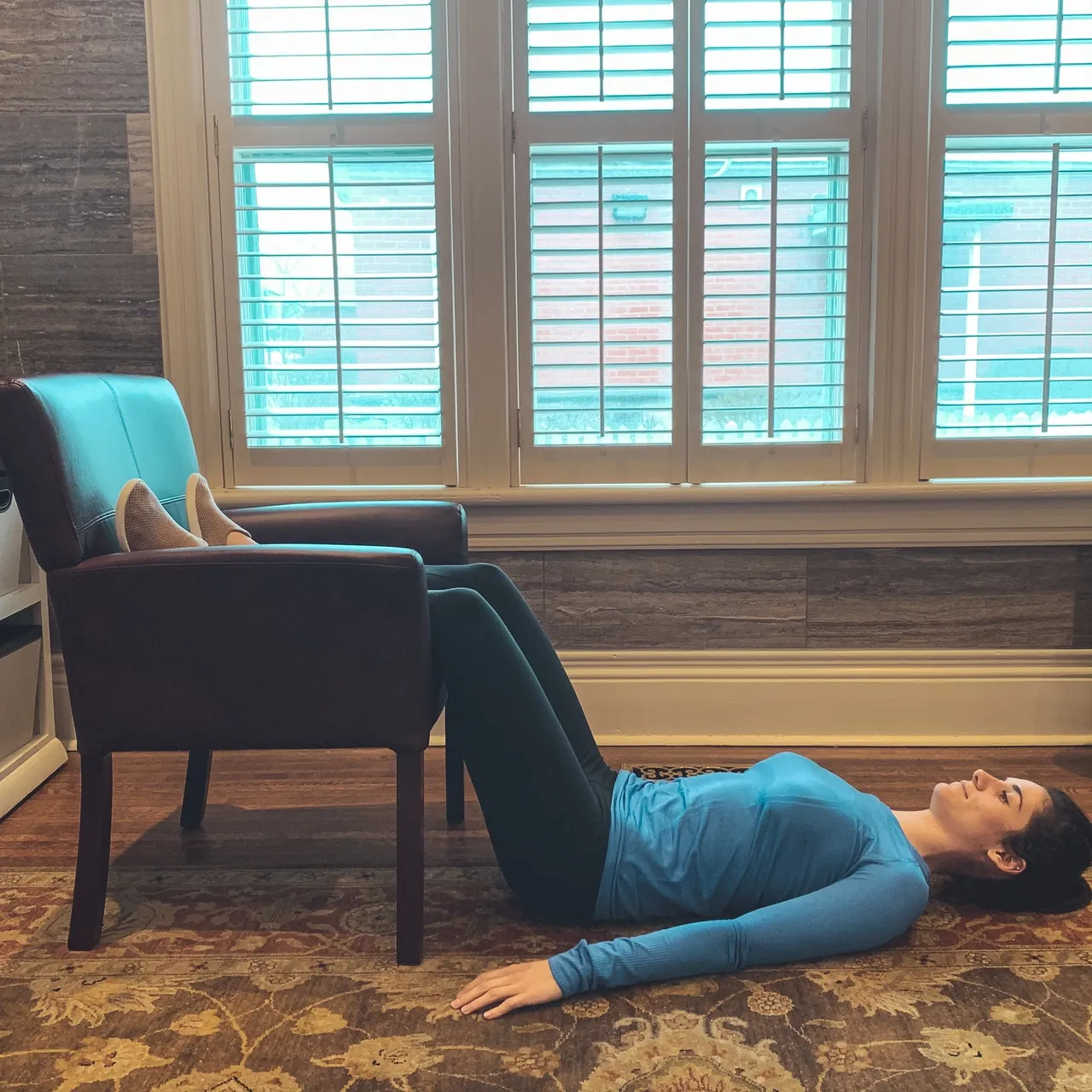 Jayme showing the Constructive Rest Position with feet elevated
- Spend time in Constructive Rest Position
- Constructive Rest: lying on your back with calves on a stool or couch
- This position is great for blood flow to the pelvic floor muscles and should be practiced for 10-15 minutes daily. Deep breathing exercises (above) can also be performed in constructive rest position.
- If this is aggravating for your lower back, try placing a pillow underneath your hips/back.
- Stretches for Releasing Tension in the Pelvic Floor:
- Examples include: Happy Baby, Pigeon Pose and Child’s Pose
- Perform 3 sets x 20 seconds in each position, daily. Practice deep breathing throughout (never hold your breath!)
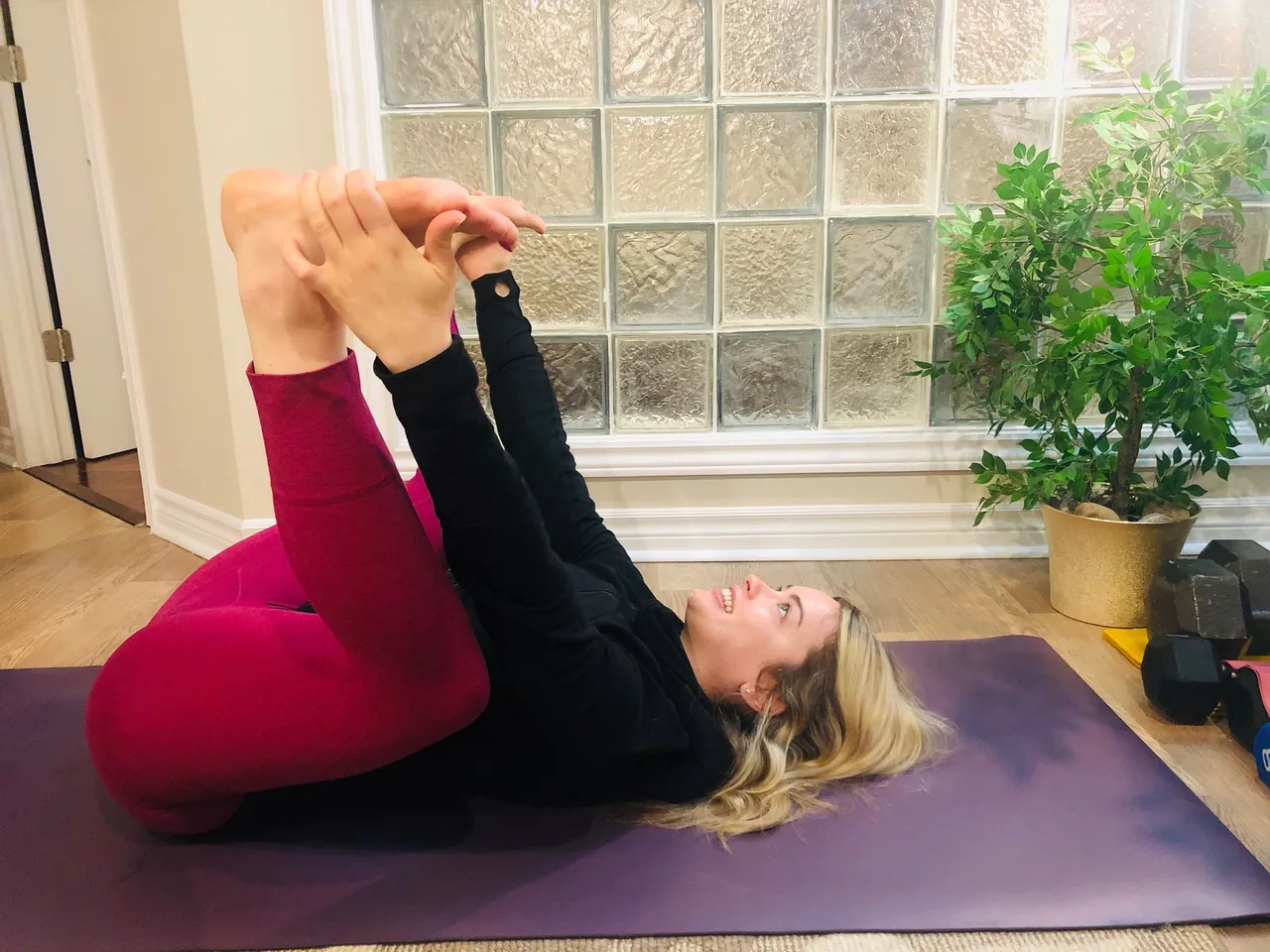 Ellen showing us the Happy Baby Pose
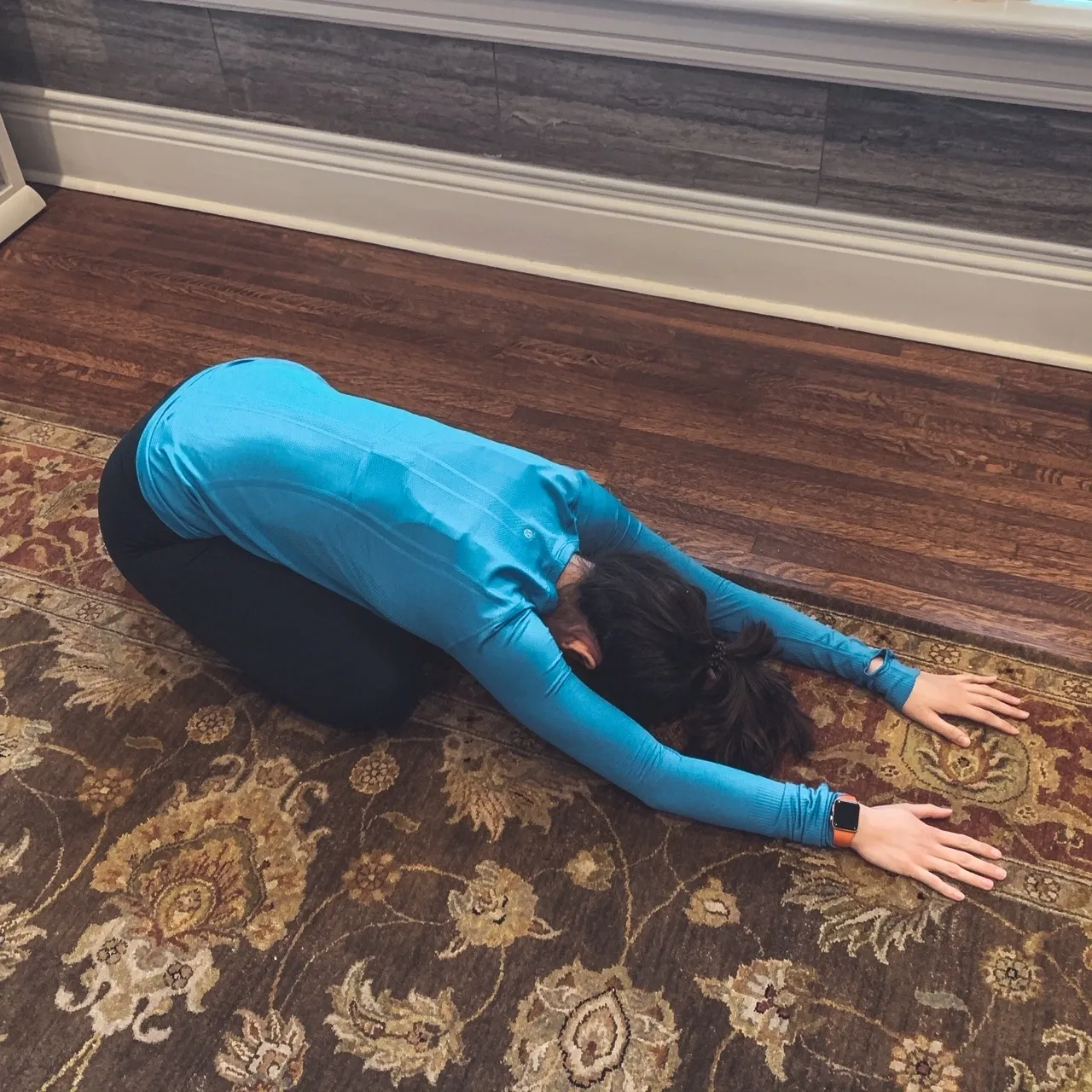 Jayme showing us the Child’s Pose
- Mindfulness, Yoga and Meditation are all great activities. Try to observe your stress and pain calmly, without judging it.
- Change the way you think about your stress: view your stress response as helpful for our performance instead of threatening. Changing our brain, changes our body! (McGoniga, K., 2013)
Lastly, remember that there are healthcare practitioners that want to help! If the stress-related tension in your pelvic floor is holding you back, contact one of the pelvic health physiotherapists at The Physio Spot!
References:
McGoniga, K. How to make stress your friend. TED Talks. 2013.
https://www.ted.com/talks/kelly_mcgonigal_how_to_make_stress_your_friend.
Office on Women’s Health. Stress and your health. U.S Department of Health and Human Services. 2019.
van der Velde J, Everaerd W. The relationship between involuntary pelvic floor muscle activity, muscle awareness and experienced threat in women with and without vaginismus. Behav Res Ther. 2001;39(4):395-408.
VanDyken, C. Change your brain, change your pain booklet. Pelvic Health Solutions.