In recent years, healthcare professionals have increasingly recognized dry needling as an effective therapy for managing musculoskeletal pain and improving physical function, according to the Journal of the American Board of Family Medicine.
Dry needling is a minimally invasive, evidence-based procedure involving the precise insertion of thin needles (called a monofilament) into dysfunctional muscle areas or trigger points within muscles.
Below, I’ll delve into the intricate mechanisms that underlie the effectiveness of dry needling, including how it:
- contributes to alleviating pain
- enhances function
- promotes better mobility
I hope that by the end, you’ll understand the basic mechanisms of this technique and how it may be of value to yourself or anyone suffering from musculoskeletal pain or movement impairment.
Trigger Point Release and Pain
At the core of dry needling’s effectiveness lies the targeted release of trigger points—hypersensitive taut bands of skeletal muscle fibres that often contribute to localized pain.
A thin filament needle inserted into these trigger points creates a mechanical disruption in the muscle fibres, leading to a reflexive response known as the twitch response.
This twitch response helps break the cycle of muscle tightness, improving blood flow and triggering a cascade of healing events.
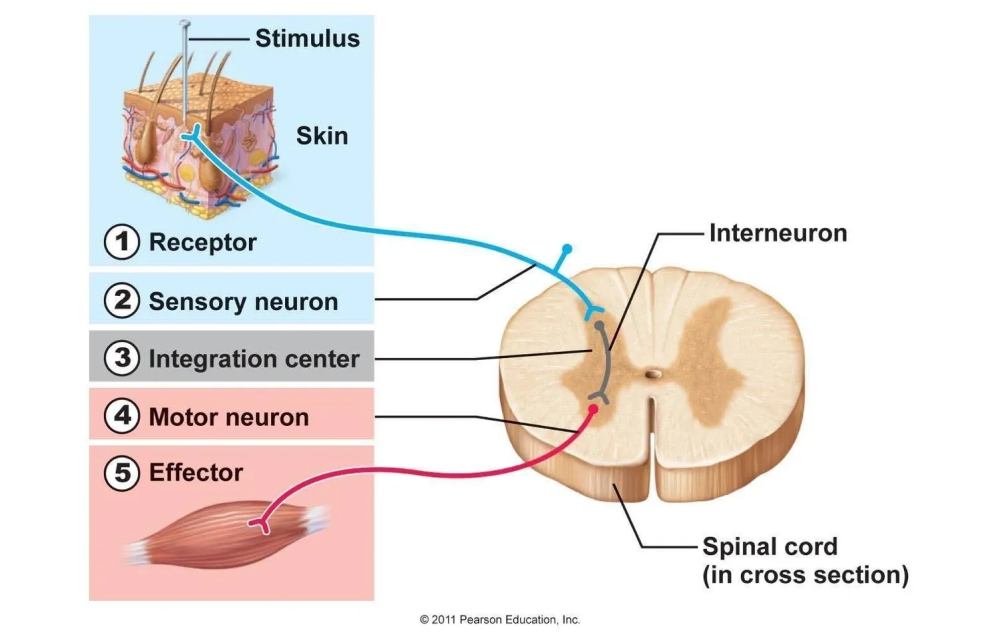
You can combine dry needling with electrical stimulation by passing an electrical impulse through the needle to the target muscle band. This technique triggers a spinal cord-mediated reflex, causing the muscle to relax or reset its tone, as shown below.
How dry needling helps
Muscle tightness and dysfunction often result from a neuromuscular imbalance, where certain muscles become overactive while others remain underactive.
Dry needling can be likened to a neuromuscular reset, helping to restore balance and function to the musculoskeletal system.
When a trained professional inserts a needle into a trigger point, the muscle fibres relax, releasing tension and improving flexibility and joint mobility. This neuromuscular reset is crucial for individuals with chronic back pain, where muscular imbalances can contribute to ongoing discomfort.
Research has shown that dry needling stimulates the release of endorphins, the body’s natural painkillers, leading to pain modulation.
The needling process can alter how pain signals are processed in the central nervous system, relieving musculoskeletal conditions such as:
- pain following injury or accidents
- sprains and strains
- tension headaches
- spinal pain
The insertion of needles during dry needling also promotes enhanced blood circulation in the targeted areas.
Improved blood flow is essential for delivering oxygen and nutrients to the tissues, aiding their repair and regeneration. This increased circulation helps reduce inflammation, a common factor in many painful conditions.
Enhanced communication between the nervous and muscular systems
The effects of dry needling extend beyond the local muscle tissue to impact the communication between the central and peripheral nervous systems (i.e. the connection between your brain and muscle).
Dry needling engages the nervous system by targeting trigger points and eliciting the twitch response, promoting a more efficient signalling process.
You can expect an improved ability to pinpoint your pain. Your body will learn the correct motor programs for the long-term resolution of movement dysfunction.
This enhanced communication between brain and muscle is particularly beneficial for individuals with sciatica or neuropathic pain conditions. By influencing the nervous system’s response, dry needling can:
- reduce nerve-related pain
- improve overall nerve function
- help you move better
What to do now
Dry needling works through multiple mechanisms that target pain, function, and mobility by engaging various physiological processes. Substantial evidence supports its effectiveness, making this technique highly beneficial for many patients.
From triggering the release of endorphins to promoting tissue repair and enhancing neuromuscular balance, dry needling has proven to be a versatile and effective intervention in musculoskeletal health.
Book an appointment at our Markham Physiotherapy Clinic or our new physio clinic in Stouffville
Words from the author
I have used dry needling consistently throughout my 12 years as an orthopedic physiotherapist to help patients recover from various conditions. I believe in its effectiveness, having witnessed the tremendous benefits it provides to patients recovering from injuries and returning to high activity levels.
In addition to being a practitioner, I am also an assistant instructor of dry needling for physiotherapists, helping to educate colleagues who wish to add this incredibly useful tool to their toolkit.
Dry needling is crucial because it relies on a comprehensive treatment plan tailored to your needs.
Physiotherapists rarely use dry needling as a stand-alone treatment. It typically follows a thorough physical examination and is combined with other treatments like exercise programs, self-management education, and various forms of manual therapy.
Sources:
- https://www.jabfm.org/content/23/5/640
- https://academic.oup.com/ptj/article/101/3/pzab070/6145047?
- https://www.mdpi.com/2077-0383/12/3/1205
Author: Slav Feldman
- Book an appointment with Slav
- MSc.PT, MClSc.MT, FCAMPT, ACPAC
- Registered Physiotherapist
- Assistant Instructor in FDN level 1 and 2

written by:
Romano Sulit
Running doesn’t inherently weaken the pelvic floor, but if the muscles.