It is one of the most used joints in the human body and yet it’s the least addressed and treated joint in the human body! You guessed it… it’s your TMJ?!
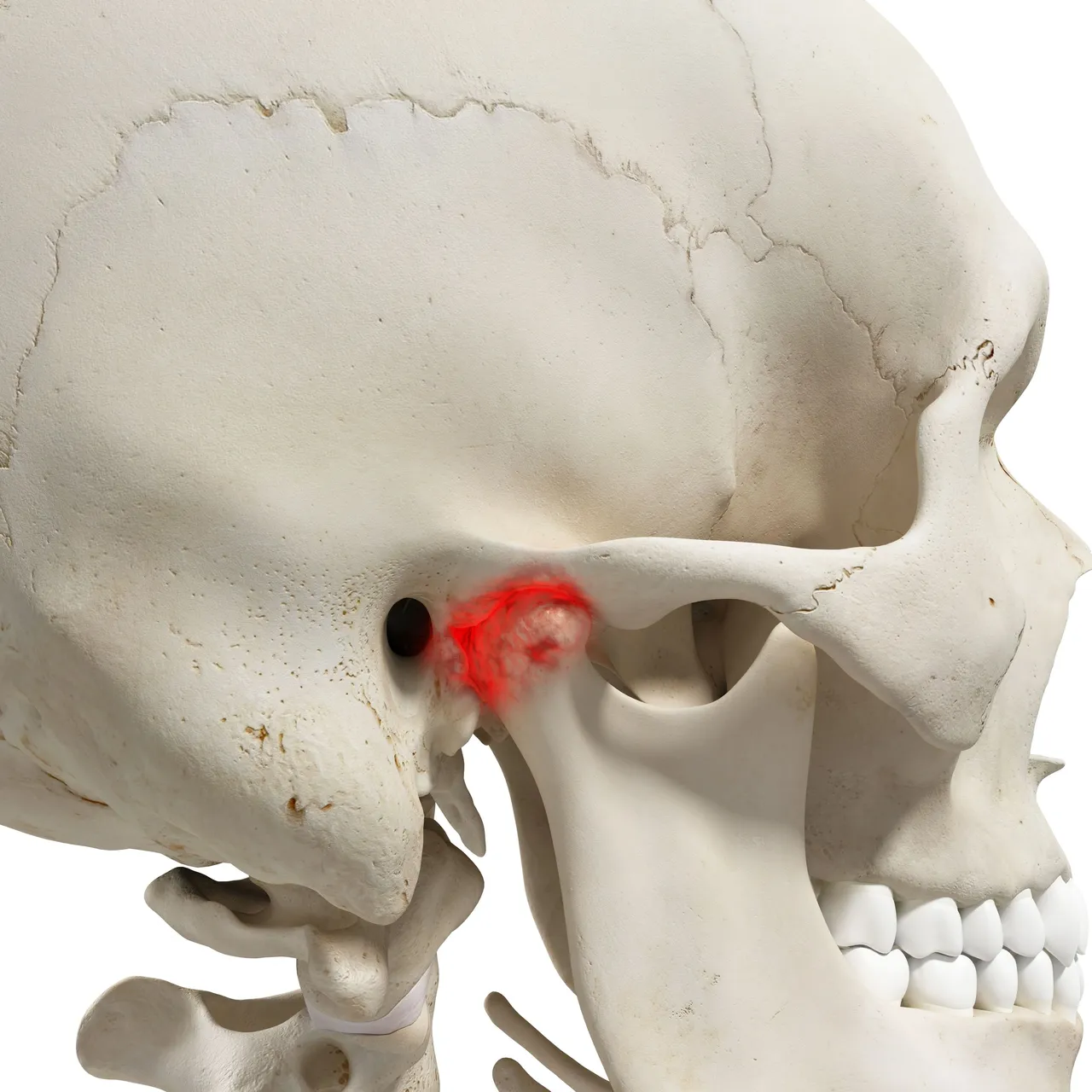 TMJ anatomy
What is a TMJ?
Your TMJ, or Temporomandibular Joint, is the joint that connects your lower jaw to your skull. These joints, along with several muscles, allow your jaw to move up and down, side to side, and forward and back. This coordinated movement allows us to do things like talking, chewing, yawning, and swallowing. If you are having any problems or pain and discomfort doing these activities, then you may have TMJ Dysfunction.
When should I get help for my TMJ?
If you experience any of the following, then your TMJ could be part of the problem and you should have it assessed.
● Clicking or catching in your jaw
● Pain or tenderness in your jaw with opening your mouth wide, yawning, chewing, prolonged talking or biting
● Headaches, especially if they are along the temporal region or occur in the morning (possible grinding or clenching at night)
● You have the sensation of fullness or tinnitus in your ear
● Post motor vehicle accident
● Neck stiffness
How can Physiotherapy help with my TMJ Dysfunction?
The TMJ is a joint with a disc, nerves and muscles, and just like our physiotherapists can help you with your knee joint, they can also help you with the joint in your jaw. Our physiotherapists will take a thorough history, assess the resting position of your jaw, the way your jaw opens, and they will palpate to find areas of tenderness in order to determine what is causing your problem. Your physiotherapist may also assess your overall posture and neck as well, as problems in these areas can contribute to TMJ Dysfunction. Treatment for your TMJ may include mobilizations or manual therapy, acupuncture, soft tissue release, a home exercise program, and more.
Having Problems with your TMJ? Try some of these Self-management Strategies below from the Advanced Physical Therapy Education Institute, and check out their Do’s and Don’ts for TMJ Symptoms below.
The Do’s and Don’ts for TMJ Symptoms
Do’s
● Consult your dentist
● Wear a mouthguard if prescribed by your dentist
● Sit up tall when eating
● Try a soft diet
● Relax! Stress can cause more clenching and grinding
● Rest your tongue on the roof of your mouth
● Keep your mouth closed with lips lightly touching to promote nose breathing
● Do the exercises prescribed by your physiotherapist! This may include specific exercises or stretches for your jaw or even your neck! Check out our blog 4 Easy Stretches to Relieve Neck Tightness for some ideas!
Don’ts
● Avoid prolonged forward head posture and slouching
● Avoid taking big bites (think apples)
● Don’t chew gum, pens, etc.
● Avoid clicking your jaw on purpose
● Try not to clench your teeth together
● Don’t bite your nails
● Avoid talking too much or with your mouth too wide if it makes things feel worse
● Don’t rest your chin on your hand
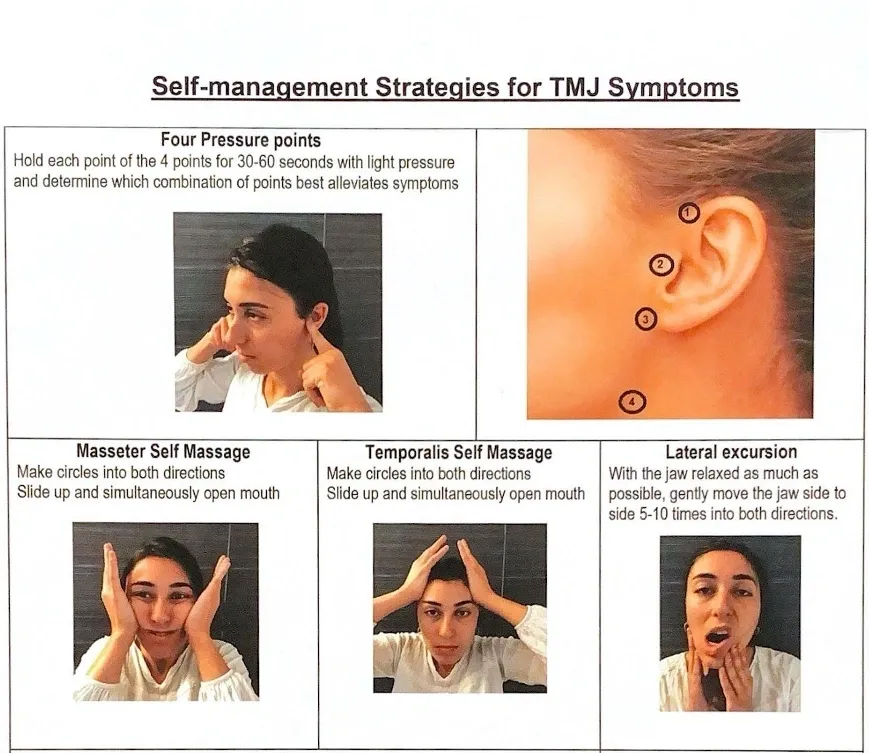
TMJ management
When should I consult a dentist about my TMJ?
Dentists have extensive training about occlusion (how your teeth come together), bruxism (grinding or clenching of the teeth), and other issues that could be exacerbating the TMJ. If you struggle with something like bruxism, a dentist may prescribe a mouth guard for daytime or nighttime use. We recommend you always consult your family dentist if you have a problem with your TMJ. Want to learn more about how a dentist can help with your TMJ? Our local Markham Family Dentists at Filgiano Dentistry are happy to help!
Ready to finally find some relief for your jaw pain, click here to book with one of our physiotherapists to get started!