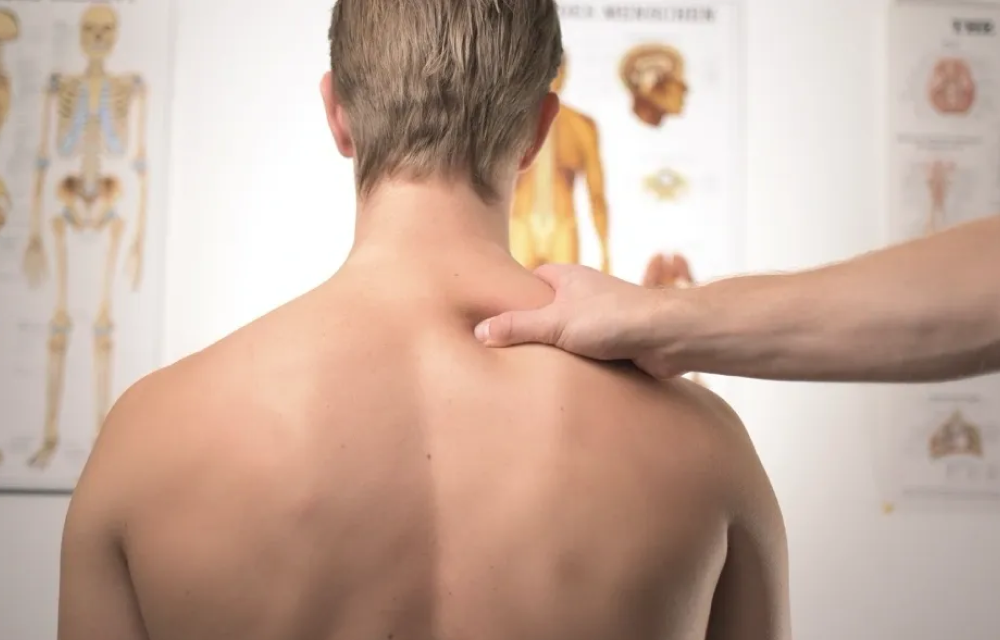
Feeling stiff? Over the past few months many of our clients have been working from home, spending much more time in front of their computers and are now feeling the effects. Extended periods of sitting, whether at our computers or not, can contribute to stiffness of the mid back aka the thoracic spine. Although the demands of jobs and lifestyles today may require more sedentary time, there are easy ways to counteract this! Thoracic mobility is essential for many reasons and incorporating mobility exercises into our daily routines can help make noticeable improvements.
Why is Thoracic Mobility Important?
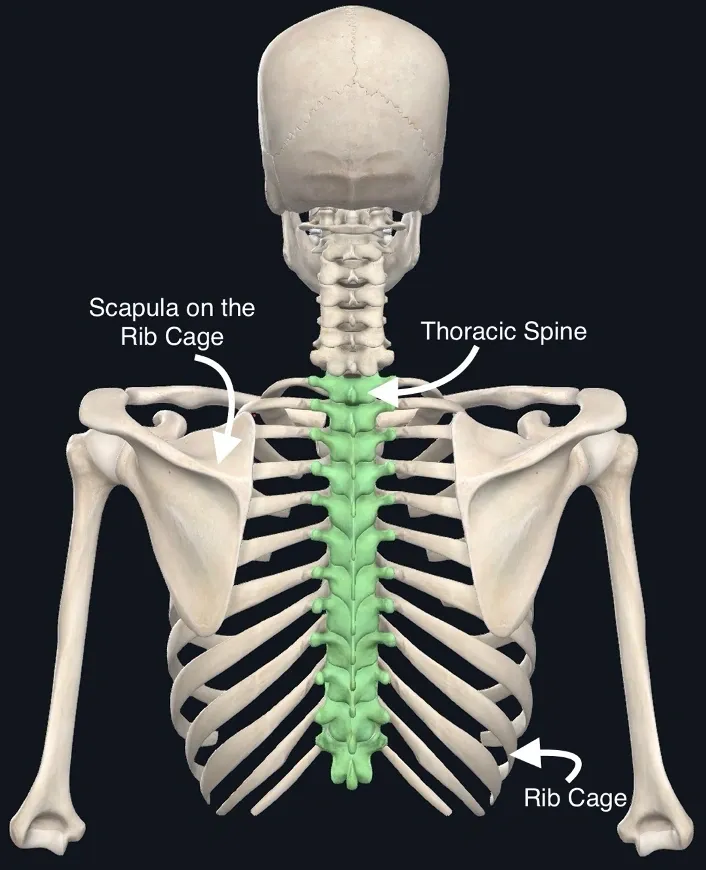
Twelve vertebrae form the thoracic spine which connects with the ribcage and sternum. The characteristics of the vertebrae and the orientation of the joints between each vertebrae influence the movement that can occur. The thoracic spine allows for movement in all three planes: flexion and extension, side flexion, and rotation. The majority of rotation that occurs from our back is from the thoracic spine and is essential to maintain!
But there’s more…
The thoracic spine also plays a role in these functions:
· Upper extremity movement
o The ribcage creates a surface for the scapula (shoulder blade) to move on. Therefore, the posture of the thoracic spine because its connection with the ribcage influences shoulder mobility.
· Head and neck movement
o The thoracic spine creates a stable base for the neck and head to move. The posture of the thoracic spine influences mobility of the neck!
· Breathing
o Once again, the thoracic spine’s connection with the ribcage influences function. Thoracic extension is paired with inspiration and flexion with expiration.
How Can I Improve My Thoracic Mobility?
Now to the fun part! Here are a few great exercises to build into your daily routine.
1. Thoracic extension over a foam roller
o Place a foam roller on the floor and lay on your back over the roller at the level of your midback. Tuck your chin in and arch backwards through your midback. Gradually move the roller from the level of the top of the scapula to the bottom of the scapula to target different areas of the thoracic spine. Repeat 5 times at each segment.
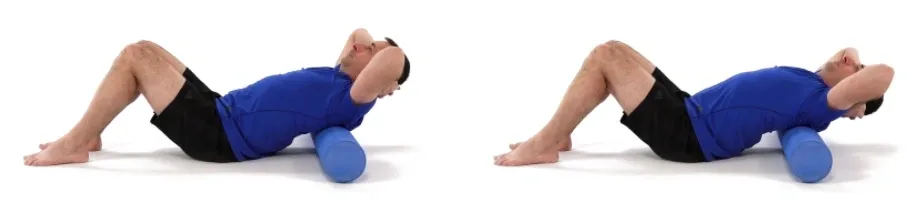
Thoracic Extension Exercise
2. Cat-Cow
o Start on all fours with your hands directly under the shoulders and knees under the hips. To perform cat, exhale and round through the mid-back lifting the ribcage towards the sky and allow your head and neck to relax. To perform cow, inhale and lift the head and chest while allowing your stomach to sink to the floor. Repeat 15 times.
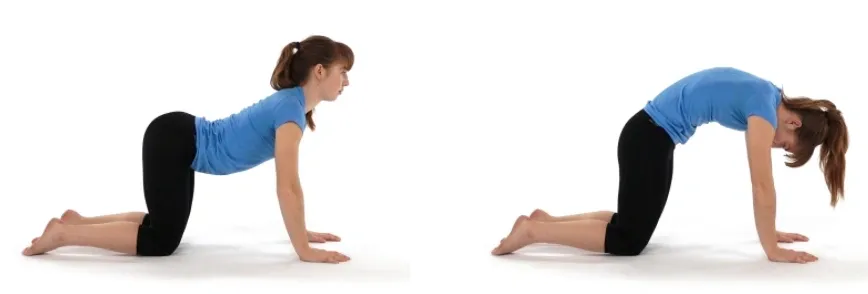
Cat-Cow Exercise
3. Thread the needle
o Start on all fours with your hands directly under the shoulders and knees under the hips. Begin with a neutral spine. Exhale and reach with one arm under the opposite arm as far as possible while rotating through your midback. From this position, inhale and reach back in the opposite direction, opening up your chest. Your gaze should follow your hand. Repeat 15 times.
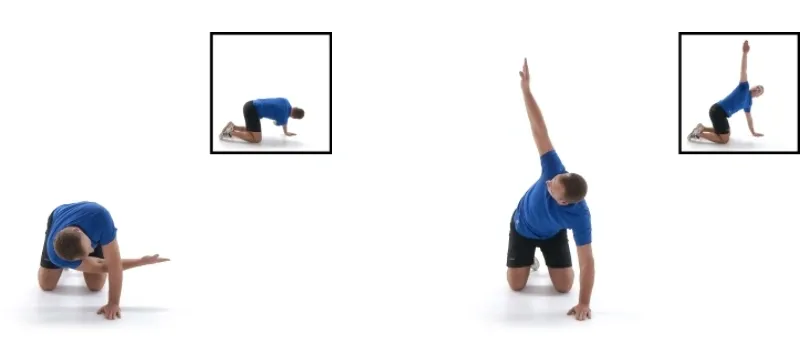
Thread the Needle Exercise
As always, any of our amazing Markham physiotherapists would be glad to answer all of your questions and help to optimize your mobility!