Gavin Sum PT, MScPT; BAKin
Did you know that shoulder impingement is one of the most common causes of shoulder pain? In fact, the majority of shoulder pain patients we treat have signs of impingement due to their daily activities.
I’ve had the pleasure of being involved in the care of multiple individuals dealing with nagging shoulder pain, limiting their ability to participate in activities, including sports, weight lifting or general fitness.
A formal physiotherapy assessment is a great way to fully understand what may be causing your shoulder pain.
We can focus on providing you with a diagnosis and prognosis in addition to providing exercises/movements that can cater specifically to you and your rehabilitation goals.
However, the following exercises are a great place to start working on your shoulder before booking an appointment with a physiotherapist. I show you how below in our Stouffville Physiotherapy clinic.
In this article, you will learn what causes shoulder impingement, signs that suggest you have it, and 5 effective exercises to help you reduce it!
Pec/Doorway Stretch
When you have tight chest muscles, it can pull your shoulder joint into a forward and downward position. This position decreases the space between the bones in your shoulder joint and causes more shoulder impingement. By stretching out the chest muscles, you can reduce the tension on your shoulder, which will create more room for those tendons to move around.
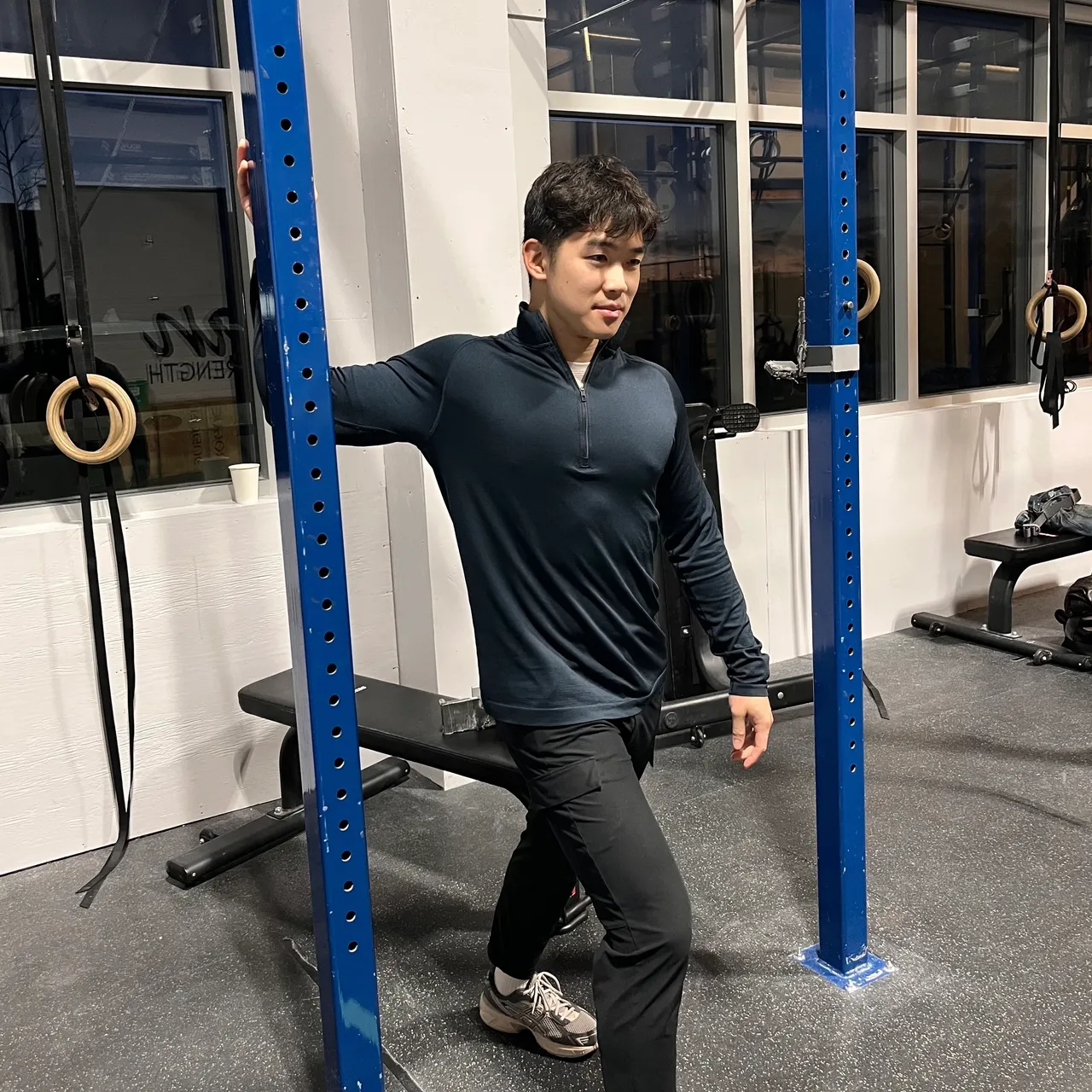 Gavin doing a doorway stretch in our Stouffville physiotherapy clinic
Instructions:
Begin by finding a doorway, squat rack or a stable surface that can support your body weight.
Place one or both arms at a comfortable level (not too high or low) and slowly lunge forward.
You should feel a comfortable stretch just in front of your shoulder around your pecs.
Hold this stretch for 30 seconds, repeat 2-4 times.
Lat Stretch
In addition to tight chest muscles that can pull your shoulder joint forward, another big muscle can also heavily impact the shoulder. The latissimus dorsi is a muscle on your back that pulls your arms down and also acts on the shoulder joint. When this muscle is overworked, weak or just tight, it can cause an increased downward pull on the shoulder, causing you to be at an increased risk of shoulder impingement. Stretching out this muscle can also help relieve compression in the shoulder, minimizing the chance for muscle tendons to become impinged.
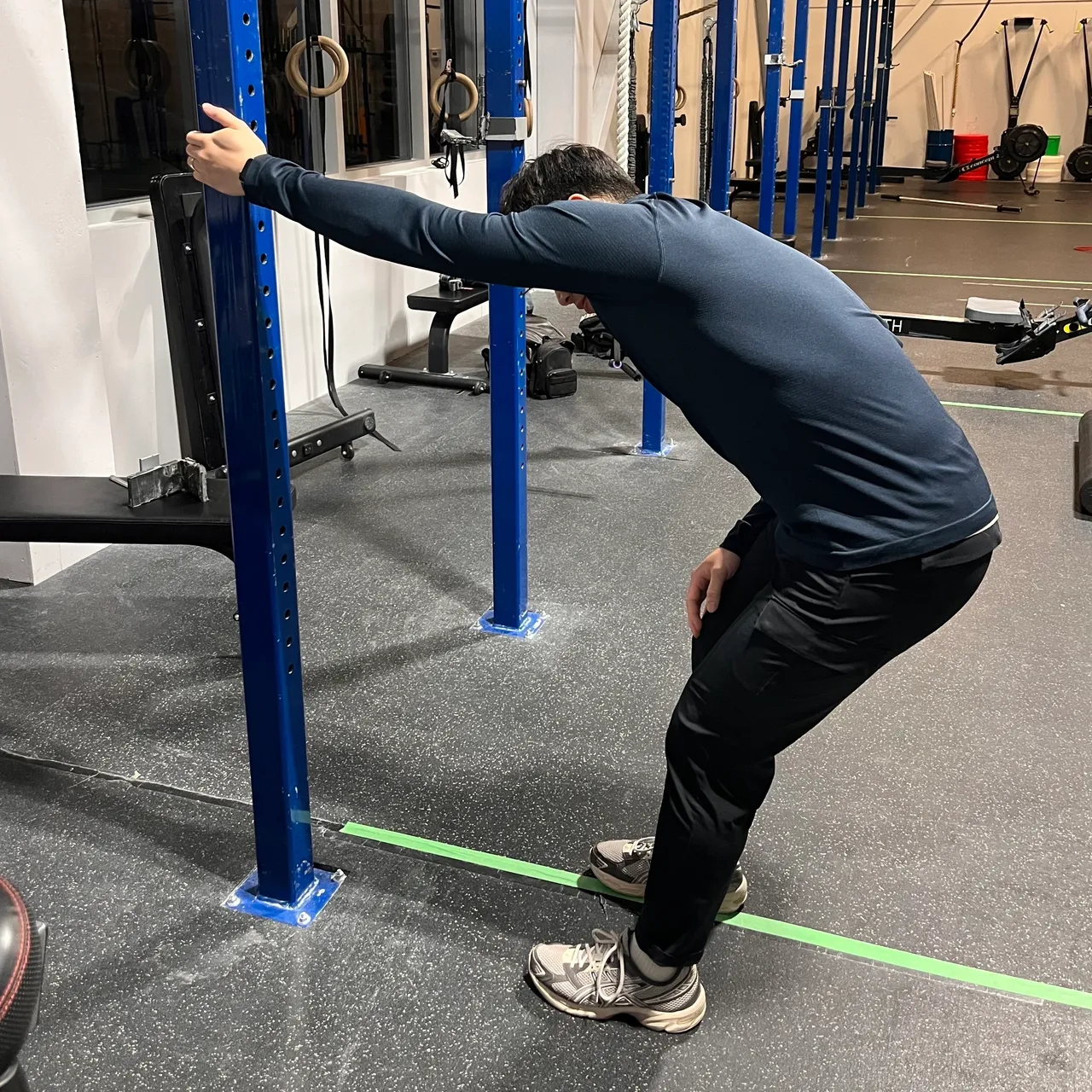
Instructions:
Begin by finding a doorway, squat rack or a stable structure that can support your body weight.
Firmly hold on to the doorway with one hand, making sure your grip is strong.
Slowly shift your weight backwards, pushing through your hips until you feel a stretch over your back muscles (on the side in which your hand is holding onto the door or structure).
Ensure you feel a strong but comfortable stretch in the lat muscle and slightly rotate your body towards that side for an extra deep stretch.
Hold this stretch for 30 seconds, repeat 2-4 times.
Wall Angel
We often find that patients are unable to raise their arms over their heads without compromising their neck and upper back posture. This exercise helps you learn to keep an upright spine AND raise your arms overhead. This creates free movement of the shoulder blade and decreases impingement.
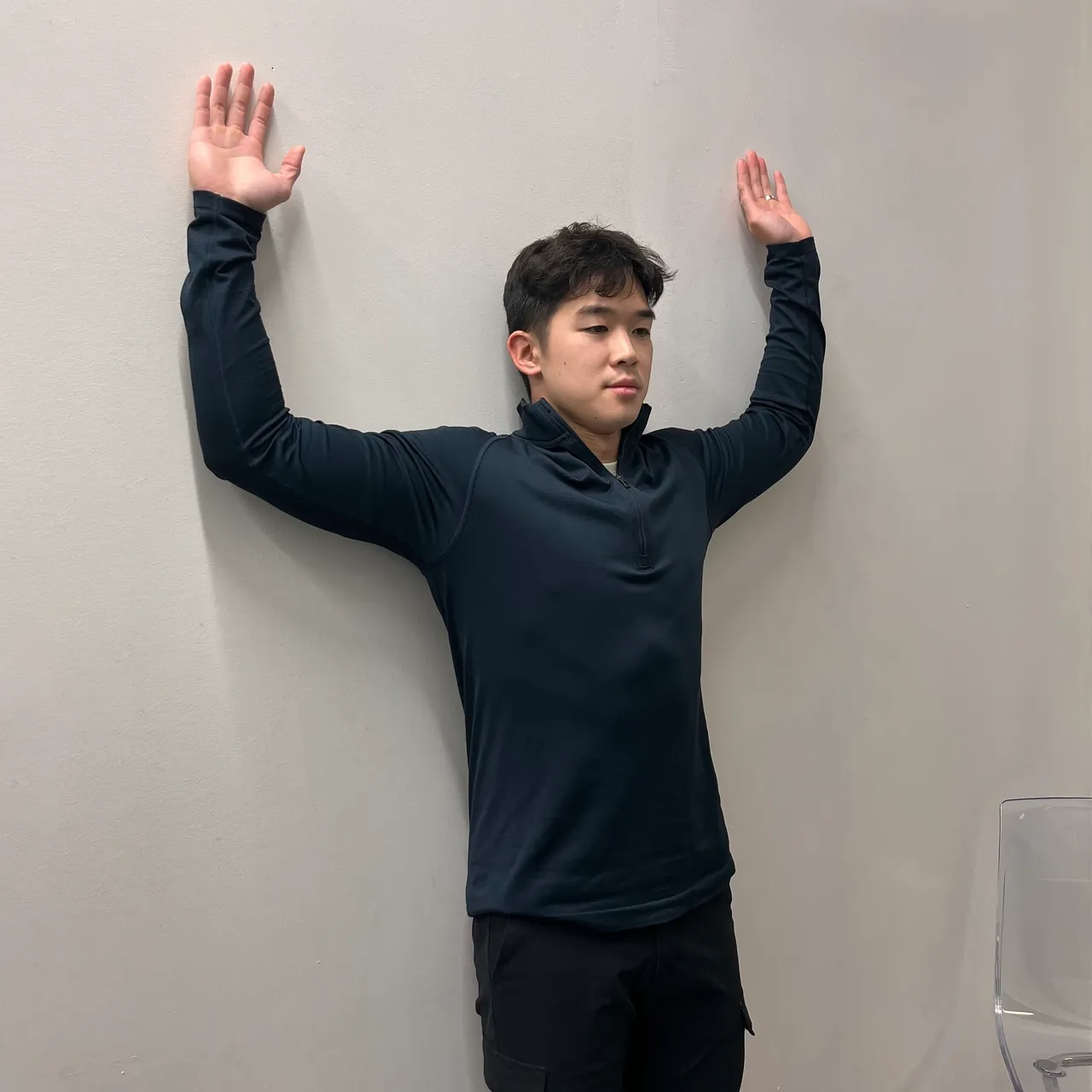
Instructions:
Begin by posting your back against a stable wall with room on either side of you.
Ensure your lower back is as flat as you can comfortably tolerate against the wall.
Place your arms 90 degrees from your body and elbows 90 degrees against the wall.
Slowly raise your arms over your head, maintaining contact with your arms on the wall.
Raise your arms above your head as far as you can comfortably go in a slow and controlled manner.
Complete this exercise 15 reps, 3 times per day.
Foam Roller Stretch
This exercise combines both shoulder stretches AND practicing getting your arms overhead while maintaining an upright posture. It can feel a bit easier than a wall angel because you are laying on your back!
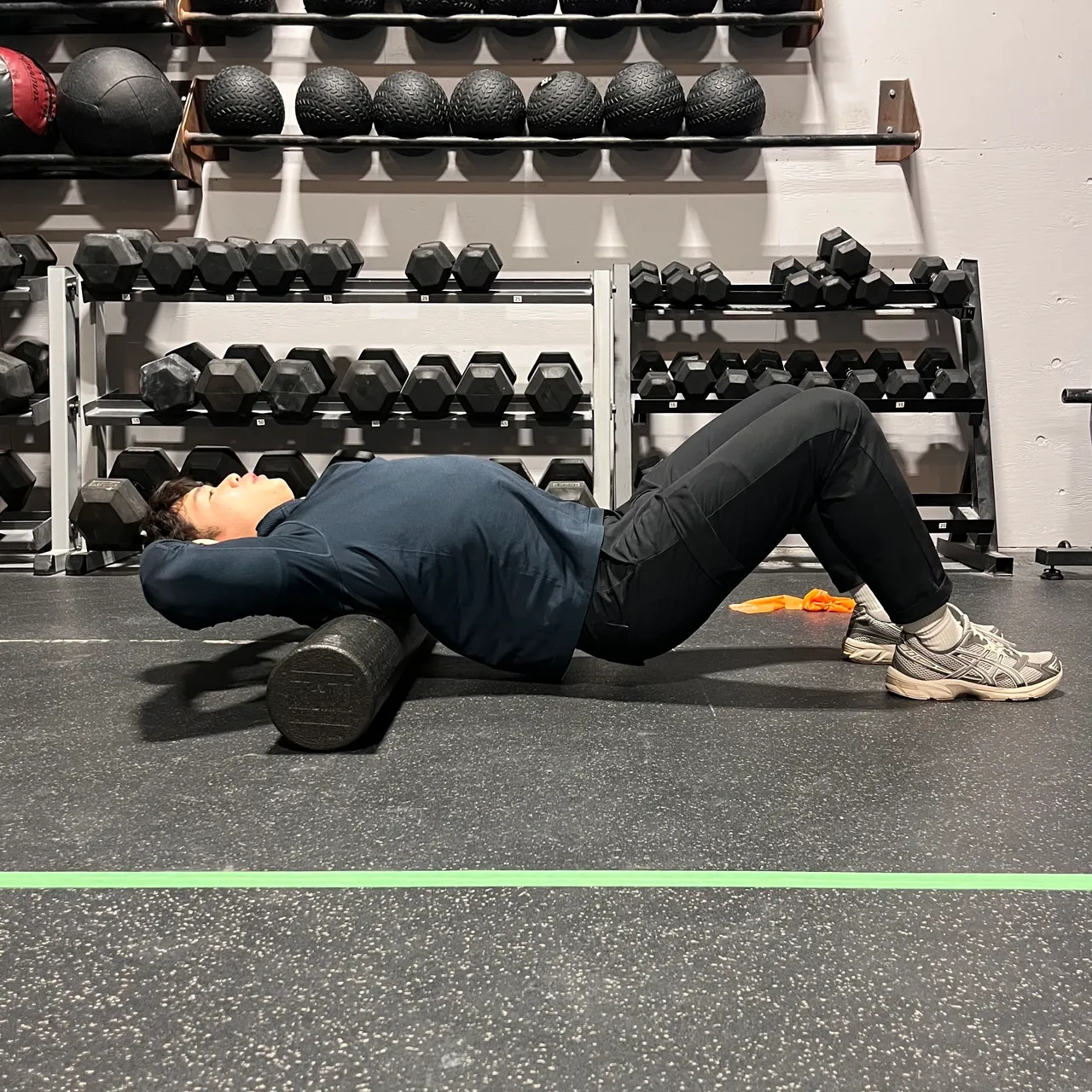
Instructions:
Find a comfortable area on the ground with either a yoga mat or carpet.
Set up a foam roller on your mid back, just below or at your shoulder blades.
While sitting on the floor, slower lower your upper body down, maintaining your hands on the back of your head during this movement.
Ensure good breathing technique throughout the movement.
Complete this exercise 10 reps, 3 times per day.
Banded Wall Slides
The last exercise can help strengthen some of the muscles surrounding your shoulder joint while you move your arms through a movement. Strengthening the muscles of the shoulder is a very important part of preventing shoulder impingement or other injuries that may arise. As discussed earlier, the shoulder is a very mobile joint, so we want to ensure that all the muscles are strong enough to support all the movements you do in your day-to-day life.
Instructions:
Position a band around your wrists; the band should be taught but not too tight.
Face a wall and place your forearms flat on the wall in front of you.
Ensure even tension on both sides; slowly raise your arms, sliding them up the wall.
Slowly descend the wall sliding down back to your starting position.
Repeat this movement slow and controlled, 3-5 reps up/down, 3 total sets.
These home exercises are a great place to start if you have been feeling signs or symptoms of shoulder impingement. However, the shoulder is a complex joint and basic exercises don’t always work for everyone. If you are unsure what is causing your shoulder pain, want extra help improving your posture, or are not getting the improvement you want, we are here to help!
Click here to book now with one of our trained Physiotherapists.
FAQ
How do you know if you have shoulder impingement?
– Pain or difficulty reaching your arms overhead
– Pain or difficulty reaching behind your back
– Inability to sleep comfortably at night due to pain or discomfort
– Limitations in exercise, activity or daily tasks due to pain or discomfort
How long should I expect my shoulder to last?
Shoulder pain can last for varying amounts of time, depending on the person and the nature of the injury.
Generally, shoulder dysfunctions can last anywhere between weeks to years if untreated.
A formal physiotherapy assessment is helpful in determining a prognosis and timeline for recovery.
How can a physiotherapist help me with my shoulder pain?
Ensuring a full history and understanding of the nature of the injury.
Formal functional assessment to assess your shoulder and body mechanics.
Developing patient-centred physiotherapy goals.
Providing hands-on manual therapy and treatment techniques to alleviate symptoms.
Personalized exercise instructions and progressions to reach physiotherapy goals.