We previously discussed the importance of the anterior oblique sling in a blog post, but did you know there’s also a group of muscles called the posterior oblique sling?
What is the Posterior Oblique Sling?
The posterior oblique sling is made up of the following muscles and structures located at the back of your body:
1. Latissimus dorsi
2. Opposite side gluteus maximus
3. Interconnecting thoracolumbar fascia
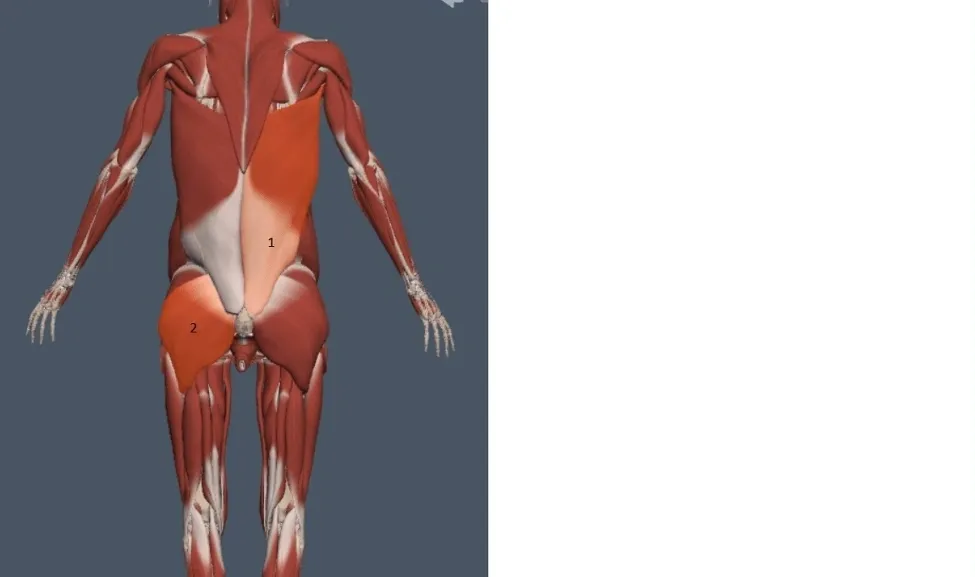
1. Latissimus Dorsi, 2. Gluteus Maximus
Image Source: Anatomy TV
What does it do, and why is it important?
It is important to understand our muscles do not work in isolation when we perform functional or whole-body activities in our everyday lives.
Like the anterior oblique sling, the posterior oblique sling plays an important role in providing stability to the sacroiliac joint and the diagonal transfer of forces between the lower and upper body through the pelvic region in activities such as walking, running, and activities involving rotation of the body like golf.
When these muscles are not working optimally together, it can change how force is transmitted through the sacroiliac joint and make it harder for our bodies to drive forces between our legs and arms. This can lead to compensation in other parts of the body as well as contribute to pain in the lower back or pelvic region.
How do I know if this is the cause of my pain?
You may experience:
- Back pain
- Pain radiating down to the back of your thigh
- Weakness with squat exercise
- Discomfort with transitional movements (sit to stand, lying to sitting)
- Pain stepping off a curb
- Back pain getting in and out of your car
Your physiotherapist can take a history and perform a battery of assessment tests to help you determine the right course of action.
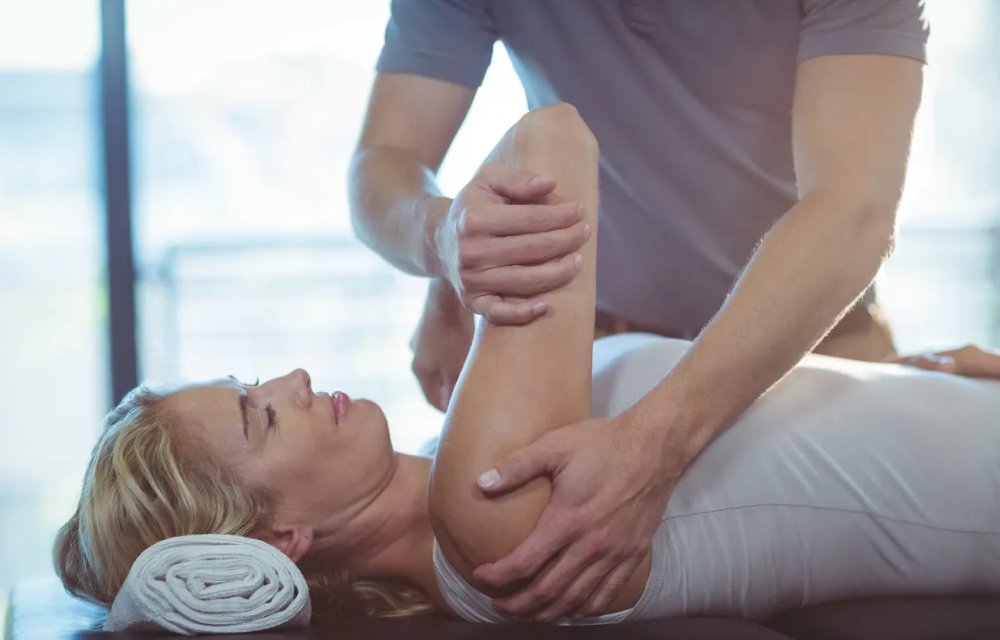
The treatment will include education, manual therapy, corrective exercises, and possibly other modalities, such as dry needling or taping.
How can I improve the function of my Posterior Oblique Sling?
Here are a few exercises to target the muscles that make up the sling. Please discontinue if you are experiencing any pain with the exercises.
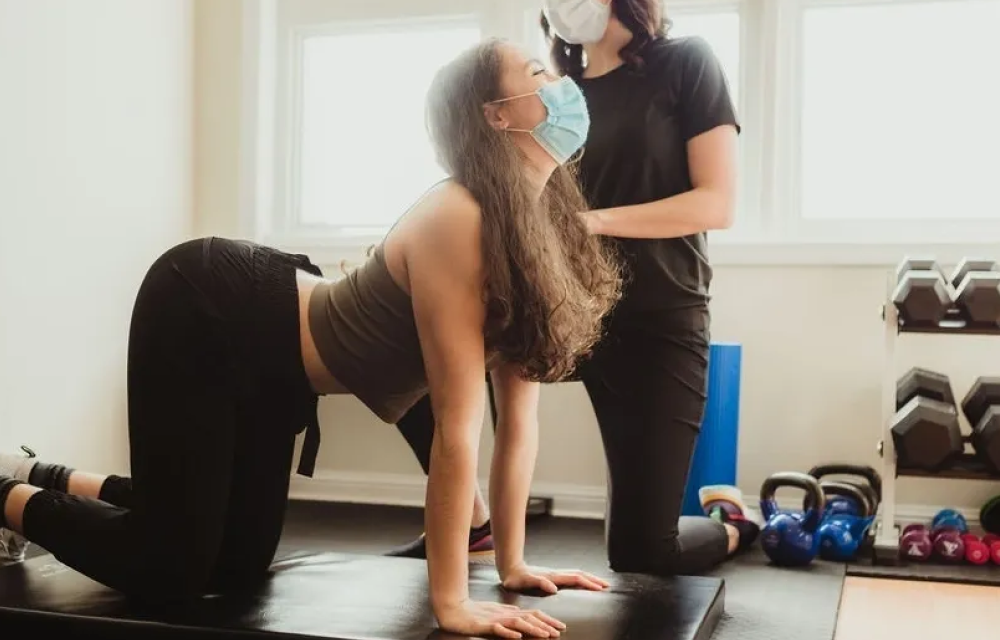
Bird Dog Rows
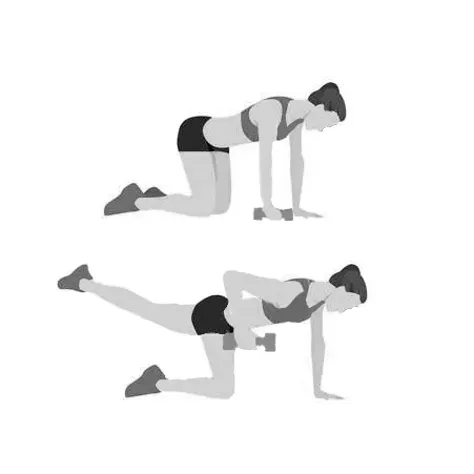
From a quadruped position, straighten one leg so that it is parallel to your back. To engage your core and glutes, perform a row with the opposite arm by lifting the weight towards your body. Slowly lower your arm and leg. Try these for 8-12 repetitions and repeat 2x.
Single Arm Pulldown
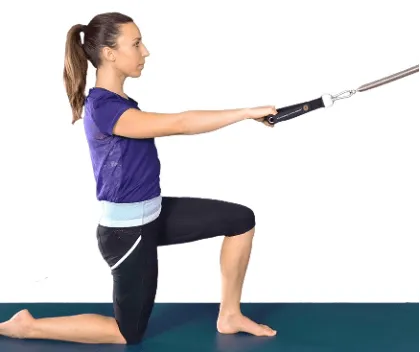
In a half-kneeling position, pull the resistance band or cable down towards the kneeling leg. Maintain stability by engaging the glutes and pushing the heel of your front leg into the ground. Again, try to complete these for 8-12 repetitions and repeat 2x.
Please discontinue performing the exercises if you experience any new or worsening discomfort or pain. If you are experiencing low back, pelvic region, or pelvic floor pain, our Markham or Stouffville physiotherapists and pelvic floor physiotherapists can help you out!