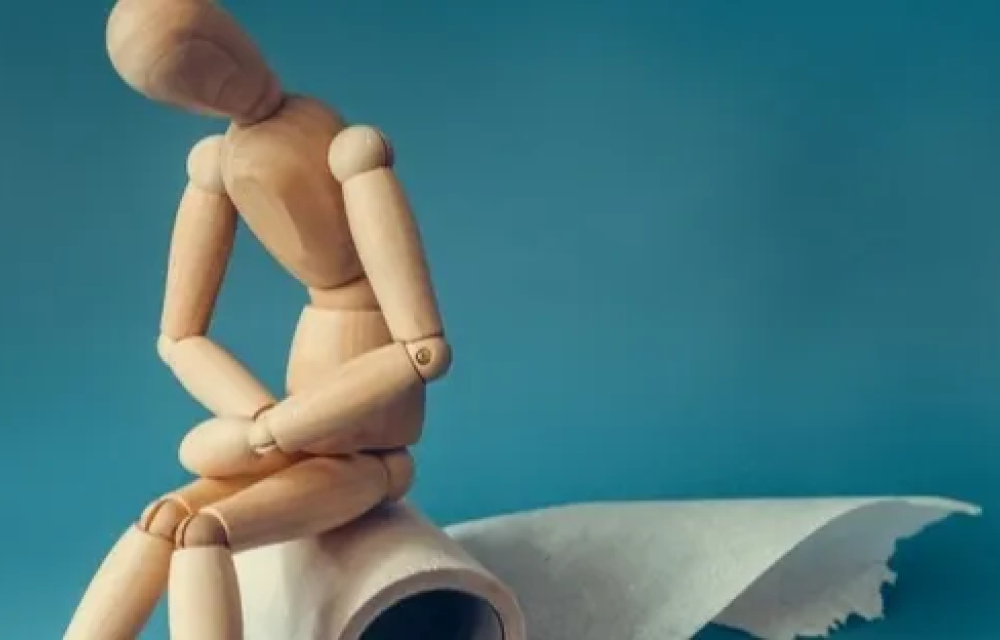
We’ve talked a lot about the relationship between the pelvic floor and peeing (read more here), did you know that pelvic floor muscles also play a role in bowel function?
Puborectalis is one of our pelvic floor muscles that wraps all around our rectum. This is the voluntary muscle we control to open or close our anal canal. When it contracts, it pulls the rectum towards our pubic bone to keep our stool in. When the muscle relaxes, it opens up the passage to let stool pass.
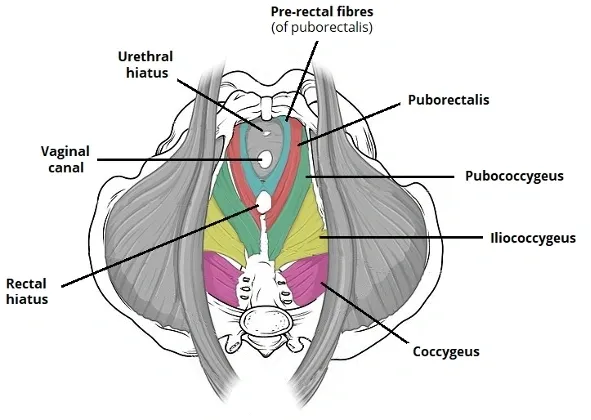
(from https://teachmeanatomy.info/pelvis/muscles/pelvic-floor/)
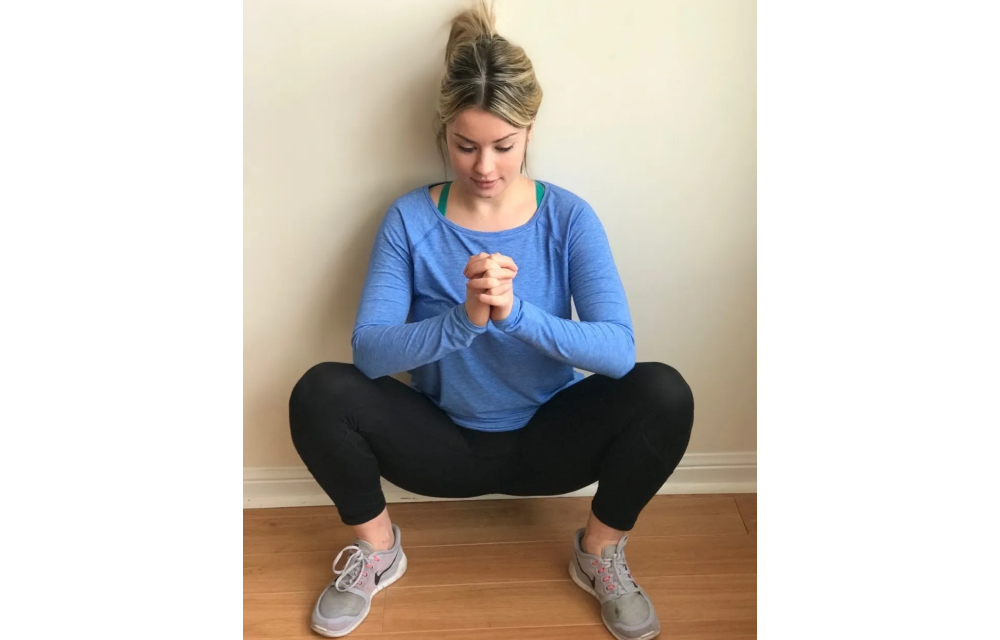
Do you have to strain when having a bowel movement? We can also change the positioning of our body to facilitate relaxing our puborectalis muscle. Most toilets in Canada are designed so that our hips will be in a 90 degrees angle, this position pulls our puborectalis muscle tight (constricting our rectum). Instead, if we are in a squatting position with our hips more flexed, it will help lengthen our puborectalis muscle (allowing the rectum to be more open). Some of you might be thinking, “There’s no way I’m going to be able to squat on the toilet!” Don’t worry. All you need to do is put a small stool in front of the toilet so that your knees can be higher than your hips when you are having a bowel movement.
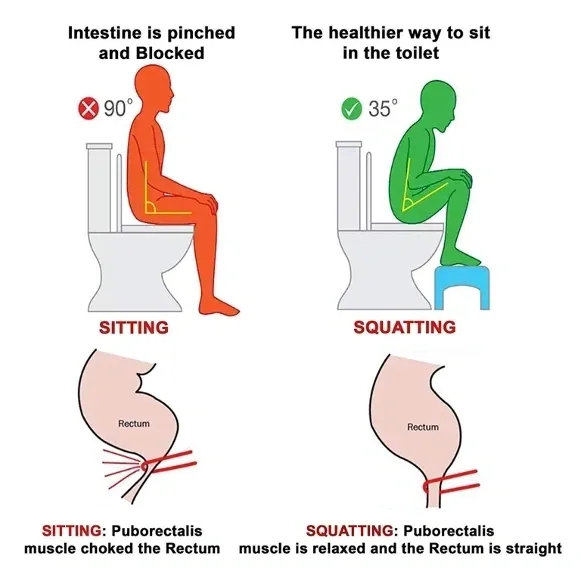
(From https://motipt.com/constipation/ )
If you have constipation, this might make your bowel movements easier. Constipation may be a cause of changes to pelvic floor muscles. Chronic straining, like when you have constipation, might affect the function of your pelvic floor muscles and can be a risk factor for developing urinary incontinence, pelvic pain, or pelvic organ prolapse!
It’s important to keep in mind that constipation is not necessarily the frequency of bowel movements but rather the type of stool you pass. Going to the bathroom once every three days is not necessarily constipation; it’s considered normal to have a bowel movement anywhere from three times a day to once every three days. However, if your stool is hard and lumpy, that will be considered constipation (you can Google “Bristol Stool Chart” to classify types of stools).
If you are experiencing constipation, try the following:
· Increase your fluid intake to be approximately ½ oz/lb of body weight (if you weigh 160 lbs, you should have 80oz or 10 cups of non-caffeinated and non-alcoholic beverages a day)
· Increase your fibre intake to 25-35 grams per day (examples of high fibre foods: beans, lentils, quinoa, potato with skin, spinach, raspberries, dried figs)
· Increase your activity/exercise levels; try to walk 30 minutes a day
· Decreasing caffeine or alcohol intake; if you do have caffeinated or alcoholic drinks, increase your fluid intake to compensate for the dehydrating qualities of these drinks
· Work with your doctor or pelvic floor physiotherapist to determine the underlying cause
· Try the ILU massage once or twice a day to help food move in your intestine
The ILU massage can be done while sitting, standing, or lying down. Use some cream or soap in the shower for your fingertips.
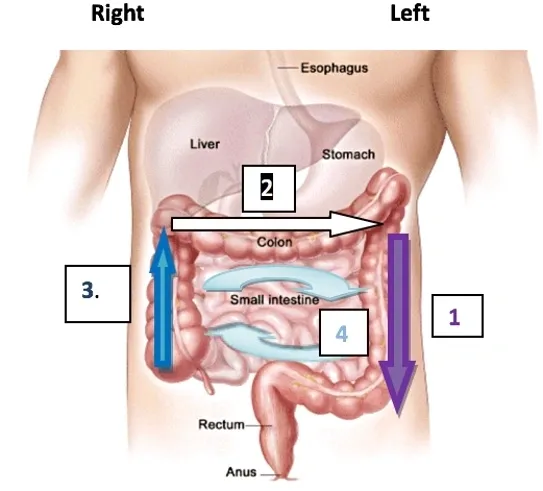
1) Letter “I” – start with a downward stroke with moderate pressure from the top of your left ribcage down to the front of your left hip bone. Repeat this 10 times
2) Letter “L” – form “L” stroke by starting at the bottom of your right ribcage, across to the bottom of your left rib cage, down towards the front of your left hip bone, repeat this 10 times
3) Letter “U” – begin from the right hip bone, stroke upwards towards the bottom of your right rib cage, across to the left ribcage, down towards your left hip bone
4) Finish with 10 strokes of a clockwise circular massage around your belly button
If you are experiencing constipation or other pelvic floor symptoms, book an appointment with our pelvic floor physiotherapist!
We have a Markham physiotherapy location and a new Stouffville Physiotherapy location to help the east end move better.